
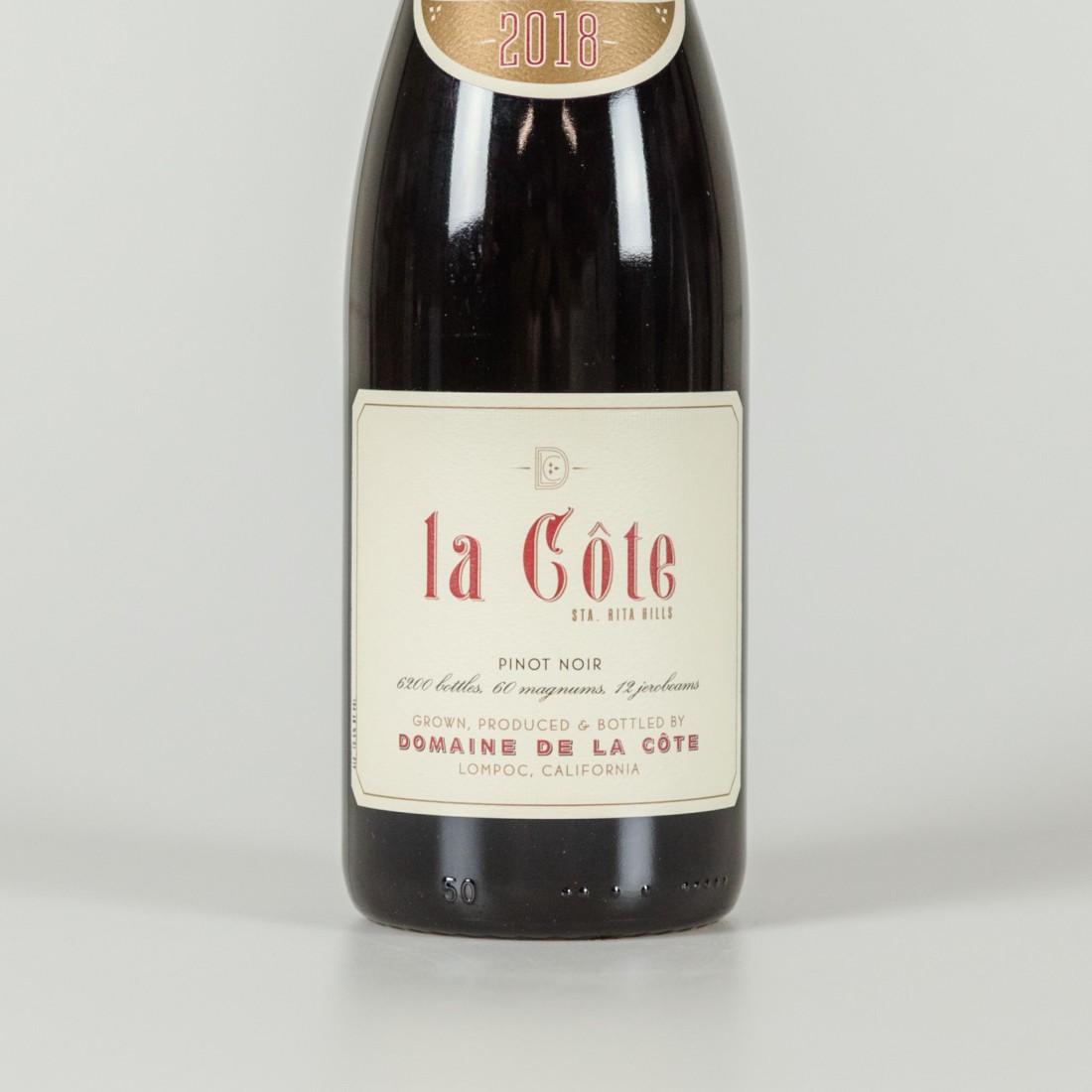
DDLC ’La Côte’ - Pinot Noir (22)


Omschrijving
Pinot Noir | single vineyard | 3,8 ha | zuid-oostelijke expositie | beschermd tegen wind | complexe bodem met 'Monterey' schalie, Diatomeeënaarde en alluviale bodems | 100% whole bunch | gisting in open beton | rijping voor 10 maanden op Frans hout (30% nieuw) | diep | chic parfum | hibiscus | blauwe bessen | zwarte kersen | zwarte thee | structuur | power | heeft ook tijd en lucht nodig
Domaine de la Côte
Domaine de la Côte bestaat uit vijf wijngaarden in het westelijkste deel van Sta. Rita Hills. 11km van de Grote Oceaan vandaan. De wijngaarden zijn aangeplant in 2007 vanuit het niets. Sashi en Rajatt waren een van de eersten die hiet druiven gingen aanplanten. Het idee is; 'Winemaking here is like growing pinot noir in a cool vintage in Burgundy, but every year'. DDLC is gestart door Rajat Parr (top sommelier) en Sashi Moorman (wijnmaker). Zij zagen in Santa Barbara een plek waar Charadonnay en Pinot Noir gemaakt kunnen worden die net zo elegant zijn als wijnen uit Europa. Santa Barbara County ligt in het zuiden van Californië en heeft 5 AVA’s waarvan Santa Rita Hill’s voor Sandhi het belangrijkste is. Daar zijn ze opzoek gegaan naar wijngaarden met oude stokken en met noordelijke expositie. Het is in de Santa Rita Hill’s (relatief) koel en er is veel afkoeling door wind van de stille oceaan. De wijnen van Domaine de la Côte worden gerekend tot de meest verfijnde Chardonnay en Pinot Noir die er gemaakt wordt in Amerika. Het gaat bij de wijnen om finesse en waanzinnig pure zuren.
Review
Following up on my tasting prior to bottling, the 2023 Pinot Noir La Côte is the most filled-in and concentrated wine on the roster, showing its perennially high-toned, lifted aromatics that contrast its twisted, sinewy, seamless and lacy texture. The finish is weightless yet punchy and extravagant, concluding with beautiful purity and stunning length. As seen in previous vintages, one can glimpse the potential for evolution here in real time, as the wine ceaselessly morphs and adds additional layers of aromatic intrigue, refined structural grip and electric energy that harmonize impeccably. This is an incredibly impressive showing, and I am eager to follow its trajectory. 96+/100 Matthew Luczy
The 2023s from Domaine de la Côte largely echoed my impressions from tasting them last year before bottling, foregrounding the vintage's lifted aromatics, vibrant yet dense mouthfeel and a graceful yet confident tannin structure, all with crystal-clear delineation between bottlings. Located in the western corridor of Sta. Rita Hills off Sweeney Canyon Road, the estate comprises almost 50 acres of vines, roughly half of which are dedicated to Pinot Noir. Low-yielding Calera, Swan and Mt. Eden plant material is planted at a density of 4,000–7,000 vines per acre on low-vigor rootstock, resulting in short canopies that don't require hedging. Combined with the region's extended flowering period, this yields small, intensely concentrated and often seedless berries, underscoring the estate's commitment to utilizing whole-cluster fermentation to provide structural tenacity. The estate's Chardonnay program has expanded to over 30 acres, although most of the fruit has been sold until it reaches sufficient maturity to be included in the estate program. The exception is the Juliet parcel, which occupies the property's westernmost section and is stake-trained at a meter-by-meter spacing.
As noted in my report last year, cellar practices at this address have evolved in recent vintages, resulting in some of the finest and most multifaceted expressions of the property I've encountered. Managed by Sashi Moorman and winemaker Claire Wilson, fermentations take place in 3.5-ton concrete vats with a native pied de cuve and the complete retention of whole clusters. Extraction is achieved through punch-downs, with fermentation and maceration lasting about two weeks. The 2023 vintage marks the first harvest where press wine was not included in the final blends, a practice that will continue moving forward. Élevage now lasts 10-11 months in barrels from Tonnellerie Ermitage, most of which are renewed each year, with minimal sulfur added via elemental sulfur rather than liquid solutions. For the Juliet Chardonnay, grapes are crushed before entering a pneumatic press, which essentially acts as a strainer to collect phenolically rich free-run juice with minimal pressure. Fermentation and élevage occur in 500-liter barrels from Stockinger and Damy, aging for one year, followed by an additional six months of maturation in tank.