
Alte Reben - Riesling (24) K


Omschrijving
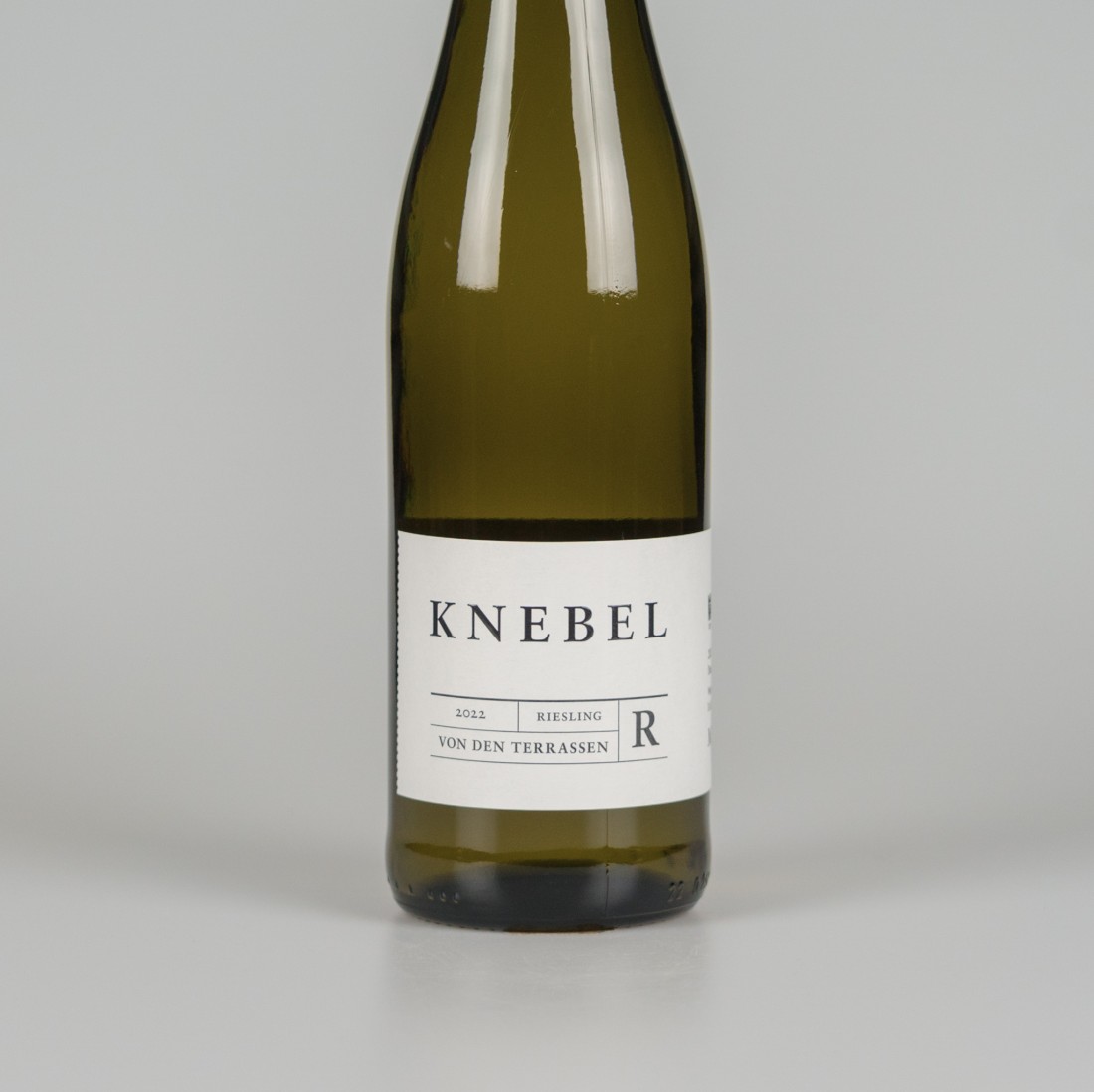
Riesling | stokken aangeplant in 1955 | afkomstig van 1e Lages 'Brückstück' & 'Hamm' | leisteen, zandsteen, kwartsiet en löss terroir | vergisting en rijping in staaltank | expressief | levendig met fraaie intensiteit | citrus | stenig | wat vuursteen | stoer | lang en diep | geweldige prijs/kwaliteit
Knebel
Acht hectare op een prachtig stuk in het noorden van de Mosel, dat is de plek waar Matthias Knebel zijn wijnen maakt. De blauschiefer en rotschiefer bodems glooien hier steil naar boven, een zeer indrukwekkend en eeuwenoud landschap. Matthias staat sinds 2009 aan het roer van het familiewijngoed. Er worden tijdens het proces geen additieven gebruikt (enkel sulfiet), de wijnen vergisten spontaan en rijpen een deel op grote eikenhouten foudres. De wijnen die hij maakt zijn loepzuiver, energiek en je proeft de warme terrassen terug in de wijn. Sinds 2017 heeft Knebel zijn intrede gedaan bij de VDP en staat sindsdien bekend als een absoluut talent voor Duitsland en de Mosel.
Review
From vines planted in 1955 in the crus Brückstück and Hamm, the 2024 Riesling Alte Reben offers very attractive aromas of flinty slate and iodine along with ripe and aromatic Riesling and lemon notes. Exciting. Full-bodied, saline and extremely vital, this is a hedonistic, dense, complex and enormously long and complex Riesling that is a best buy of the vintage in the Mosel. 12.5% stated alcohol. Screw-cap closure. Tasted at the domaine in March 2026. 94/100 Stephan Reinhardt
Matthias Knebel offered a great range of Rieslings to taste and can look back onto 2024 as en excellent vintage for the steep vineyards in Winningen. “The terraced vineyards performed very well in 2024,” he says. "We had enough rain but not too much and practically no serious problems with downy mildew. And in the end, the grapes ripened just as we had hoped.”
Knebel is therefore quite happy with his 2024 Rieslings, which were harvested by an 18-person team between September 19 and the first week of October, and almost all fermented dry, finishing with one to four grams per liter of residual sugar (except for the Prädikate and the off-dry Terrassen R). The estate wine (Gutswein) is actually the driest of the vintage, as its grapes come partly from lower-lying vineyards with more soil cover and naturally produce a fruitier and juicier style of Riesling than the barren steep slopes in Uhlen or Röttgen. Added to this is remarkable concentration and ripeness, because the frost at the end of April caused total crop failure even in the flatter vineyards along the Terrassenmosel. The current estate wine therefore comes exclusively from prime sites and was bottled for the first time 10 months after harvest and then the second time 12 months later—and this is evident in the wine’s aroma and flavor. Although the Riesling Von den Terrassen gains significantly in complexity and expression, this is even more true of the Riesling Alte Reben, which comes from nearly 70-year-old vines and is composed of the two crus Bruckstück and Hamm.
The 12.5% alcohol found on some labels of this vintage is a natural result in Winningen and not an indication of enrichment (chaptalization). Sugar enrichment actually takes place on the steep terraces, not in the cellar. “Average must weights below 80 degrees Oechsle are practically nonexistent here, provided the grapes are harvested at full ripeness,” says Matthias. “Even the wine from grapes we harvested in 2024 at 75 degrees Oechsle tastes good,” he notes, although he uses them only as a component of the final blend.
The Riesling Von den Terrassen R brings together those lots that are actually suitable for GG but did not quite reach the dry threshold. Knebel had previously used the designation “Reserve” for these wines with residual sweetness—wines that aren’t really sought after but which nature intended—unlike the VDP, which divides its world into “Erste” and “Grosse” dry wines, fruit-sweet Prädikat wines and estate wines of all kinds. The Terrassen R (a 1,000-liter tank and a 500-liter barrel) is a pure Röttgen in 2024, whereas in 2022, it came predominantly from Uhlen.
In 2024, Knebel produced his finest wines from his two grand cru vineyards, Uhlen and Röttgen. The Röttgen wines—ranging from Kabinett to Spätlese to Auslese and GG—are excellent, but the Uhlen GG and Auslese are magnificent because they are lush and generous yet also delicate and energetic, with a very long finish and mouthwatering character. The 2023 TBA from Röttgen is also outstanding. Picked during the first eight days of the harvest, this is a concentrated, precise, fresh, mouthwatering and lively TBA with a crystalline character and a highly digestible finish.